Diplo Learning Corner

Get your brain in motion

Page 105 of 124

Saying “No” in 6 easy steps

Sometimes we have a hard time telling others “No.” Unfortunately, leaving it unsaid can become very costly for you. You lose time to do the things you really want, or need, to do. And you may even feel resentful towards the other person and yourself.

Telling others that you can’t acquiesce to their every request doesn’t have to be difficult.
Martina McGowan in the article “Saying ‘No’ in 6 steps” published on her blog Martina’s story provides us a few ideas you can put into use:

  1. Explain
  2. Delay
  3. Consider it
  4. Know what you want and need
  5. Suggest an alternative
  6. But…

Read full article on: http://martinamcgowan.com/2012/11/no-6-easy-steps/

Image source: http://martinamcgowan.com/2012/11/no-6-easy-steps/

Key strategies for effective Virtual Team Management

Project managers spend most of their time managing tasks and resources on projects. This is all true whether the project is being handled remotely or if your team is sitting in the same room with you.  It is just that the skills needed to effectively manage tend to skew more heavily on effective communication and the remote aspect can invite some challenges that don’t necessarily exist in the co-location project environment.

To manage a virtual team, it should be given more attention to six key strategies:

1)       Hold meetings regularly, not sporadically

Keep every meeting.  It can be very tempting to skip what might seem like a meaningless meeting.  Even if there is nothing new to report, it is still important to have those touch points with your team to keep them fully focused and engaged.  Even if your team status call is only 5 minutes long – you still need to have it.

2)       Streamline communications

Consolidate and prioritize communications using email, texting, blogging and staying in touch and being personal. Communications of an important nature should be cohesive and never delivered in fragmentary pieces that have to be pieced together by the receiver. Mutually assess the communication preferences of yourself and your team members to develop a communication plan.

3)       Be a good listener

When you are out of easy reach and you are tasked with managing the performance of others it is easy to get into the trap of needing to transmit lots of information.  Do not forget the listening part and always be sure to keep an open mind. Be present and try to enter the perspective of those speaking to you. This will help you ask effective questions and identify what direction to go with your own needs and agenda. You might be very pleasantly surprised at how much more information you get from your team this way.

4)       Manage deliverables, not activities

In the virtual project world, it is difficult to stay focused – and keep your team focused – on the project deliverables.  Do not get too bogged down in managing the minute details because the distance you have between you and those that are performing those activities make that type of micro managing even more difficult.  Focus on the higher-level tasks and the overall deliverables and expect your team to perform.

5)       Know your team members and manage accordingly

Every employee is different. Mobile workers make it easier for managers to take a more personalized approach in how they work and interact with members of their team. Understanding what enables each employee to perform at his or her best is the most important responsibility of a manager.

6)       Leverage technology

Today, the list available tools is endless, choose what suits best for your team and project.  Choose a solid tool – like a web-based PM scheduling, status and document sharing tool for teams as an example – and ensure that your project team know how to use it.  Putting a web-based solution in the hands of the project team can definitely make project manager’s job easier as task progress update responsibility can be delegated to those actually doing the work.

Read more on: http://bit.ly/PSelYs

Nuova immagine

Image source: http://bit.ly/a6edxp

Using Stories to Inspire

A good leader must be a persuasive motivator and a good story can be a powerful leadership tool.

Well told stories can be used by leaders to inspire and motivate their people. According to Annette Simmons, author of “Whoever Tells the Best Story Wins” there are six types of stories that can be used at work:

  1. “Who I am” Stories, to give a powerful insight into what really motivates you
  2. “Why I’m Here” Stories, to replace suspicion with trust
  3. “Teaching Stories”, to make a lesson clear
  4. “Vision Stories”, to stimulate action and raise morale
  5. “Values in Action” Stories, to define what certain values mean to you
  6. “I Know What You’re Thinking” Stories, to show respect for the other point  of view while convincing your listener that you’re right.

Whatever story you tell, just keep in mind the following tips:

  • Be authentic
  • Pay attention to your audience
  • Practice
  • Create an experience

To learn more: http://www.mindtools.com/pages/article/BusinessStoryTelling.htm

Tell-Them-Your-Story

Image source: Infinityconcepts.net

The best stats you have ever seen

In his TED talk, statistics guru Hans Rosling, makes a stunning presentation on broad social and economic trends. By any logic, a presentation that tracks global health and poverty trends should be boring; but in Rosling’s hands trends come to life.

Rosling’s presentations are based on solid statistics, illustrated by the visualization software he developed. The animations transform development statistics into moving bubbles and flowing curves that make global trends intuitive and clear.

Achieving the best results

The best results are achieved by using the right amount of effort in the right place at the right time. And this right amount is usually less than we think we need. In other words, the less unnecessary effort you put into learning, the more successful you’ll be… the key to faster learning is to use appropriate effort. Greater effort can exacerbate faulty patterns of action. Doing the wrong thing with more intensity rarely improves the situation. Learning something new often requires us to unlearn something old.
Tony Buzan

Tony Buzan is the inventor of MindMapping

yoga

Image source: http://neurowhoa.blogspot.com/

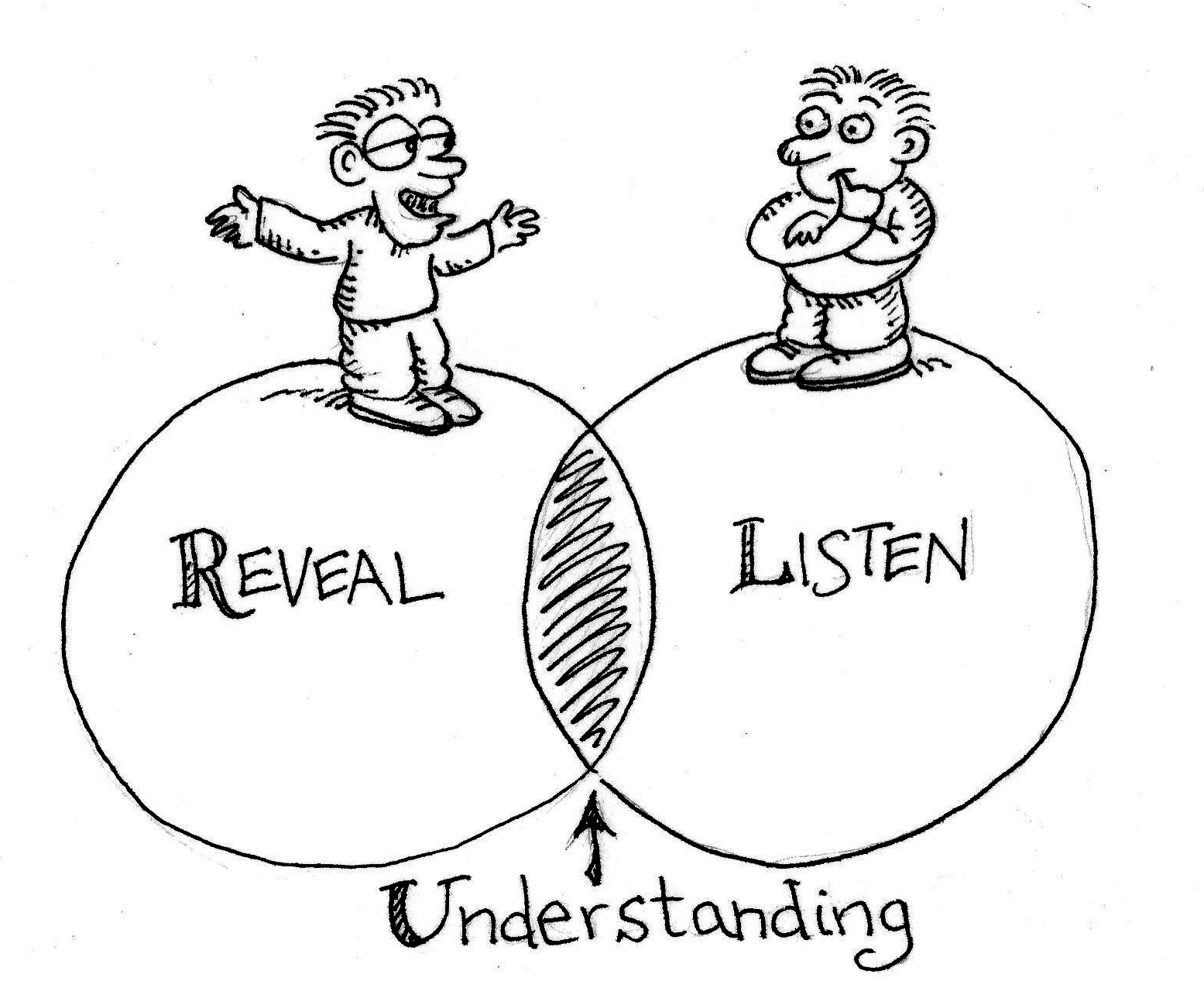
Assertive communication

Assertive behaviour allows us to maintain effectively our point of view, without prevarication of or suppleness to the counterpart’s position. An assertive way of communication goes beyond the perfect balance between two poles: passivity and aggressiveness. It involves the conversation partner and aims at finding a common solution.

Among other things, to achieve assertive communication it is essential to:

– Listen proactively (not avoiding eye contact, using gestures to express approval);
– Summarize and reformulate what has been said by the interlocutor;
– Share one’s point of view;
– Confirm that there is a relationship with the interlocutor that goes beyond the issue under discussion;
– Show empathy and propose to solve together.

Many more useful gimmicks are available at http://bit.ly/VYb147 with a selected bibliography. Now, try to put them into practice!

assertive communication 03

image source: http://bit.ly/19Ptl50

« Older posts Newer posts »